
Seattle Home Selling Guide
Home Staging in Seattle: Answers to Common Seller Questions
If you are getting ready to sell your home, one of the biggest questions is whether staging is really worth it. Do you need to bring in furniture? Can you use what you already own? Should you stage every room, or just the most important spaces?
In the Seattle area, staging is not just about making a home look pretty. It helps buyers understand the layout, the light, the room size, and the lifestyle the home offers. That can be especially important in older homes, condos, townhomes, split-level layouts, darker rooms, finished basements, and spaces that need a little imagination.
My goal with staging is simple: help buyers feel comfortable, confident, and emotionally connected to the home from the moment they see it online and walk through the front door.
In this guide, I’ll walk through the most common home staging questions I hear from sellers, including which rooms matter most, when professional staging makes sense, what you can do yourself, and how to decide where your preparation dollars will have the greatest impact.
Home Staging Basics
What Is Home Staging?
Home staging is the process of preparing a home so buyers can quickly understand, appreciate, and emotionally connect with the space. It may include decluttering, rearranging furniture, improving lighting, adding neutral decor, highlighting key rooms, or bringing in professional furniture and accessories.
The goal is not to decorate the home for the seller’s personal taste. The goal is to present the property in a way that helps the greatest number of buyers picture themselves living there.
This matters because most buyers first experience your home online. Before they schedule a showing, they are already judging the photos, the light, the flow, the room size, and whether the home feels inviting. Staging helps make that first impression stronger.
Staging Is Really About Buyer Confidence
According to the National Association of REALTORS® 2025 Profile of Home Staging, 83% of buyers’ agents said staging made it easier for buyers to visualize a property as their future home.
That is the real power of staging. It helps buyers move from “I’m not sure how this space works” to “I can see myself living here.”
In Seattle Homes, Staging Can Be Especially Helpful For:
- Rooms that feel dark during our gray or rainy seasons
- Older homes with smaller bedrooms or less open floor plans
- Condos and townhomes where buyers need to understand scale
- Finished basements, bonus rooms, or flex spaces that need a clear purpose
- Vacant homes that can feel cold or hard to interpret online
- Homes with strong personal decor that may distract buyers from the property itself
Seattle Market Strategy
Why Home Staging Matters in Today’s Seattle Market
In a fast-moving seller’s market, some homes can sell with very little preparation. But when buyers have more choices, presentation matters more. Staging helps your home stand out online, feel more inviting in person, and make it easier for buyers to understand how each space can be used.
That is especially important in the Seattle area, where buyers may be comparing older homes, condos, townhomes, split-level layouts, basement spaces, smaller bedrooms, and homes with darker natural light. A well-staged home can help buyers move past uncertainty and focus on the home’s best features.
83%
of buyers’ agents said staging made it easier for buyers to visualize the property as their future home, according to the National Association of REALTORS®.
49%
of sellers’ agents observed that staging decreased time on market, either slightly or significantly, according to NAR’s 2025 staging report.
16.8%
more active listings were on the market across the NWMLS service area in May 2026 compared with May 2025, giving buyers more options to compare.
The Real Benefit of Staging
Staging does not replace proper pricing, smart marketing, good photography, or strong negotiation. But it can reduce buyer hesitation. When a home feels clean, bright, intentional, and easy to understand, buyers are more likely to stay engaged.
This is why I look at staging as part of the overall selling strategy. The question is not simply, “Should we stage?” The better question is, “What does this particular home need in order to make the strongest first impression with today’s buyers?”
Sometimes that means full professional staging. Sometimes it means using the seller’s existing furniture, editing what is already there, improving lighting, adding warmth, and making each room feel purposeful. The right plan depends on the home, the price point, the neighborhood, and the likely buyer.
Sources: National Association of REALTORS® 2025 Profile of Home Staging and NWMLS May 2026 Market Snapshot .
Room-by-Room Strategy
Which Rooms Should You Stage First?
You do not always need to stage every room in the house. The smartest approach is to focus first on the rooms that have the biggest emotional impact on buyers and the rooms that are hardest to understand when empty or poorly arranged.
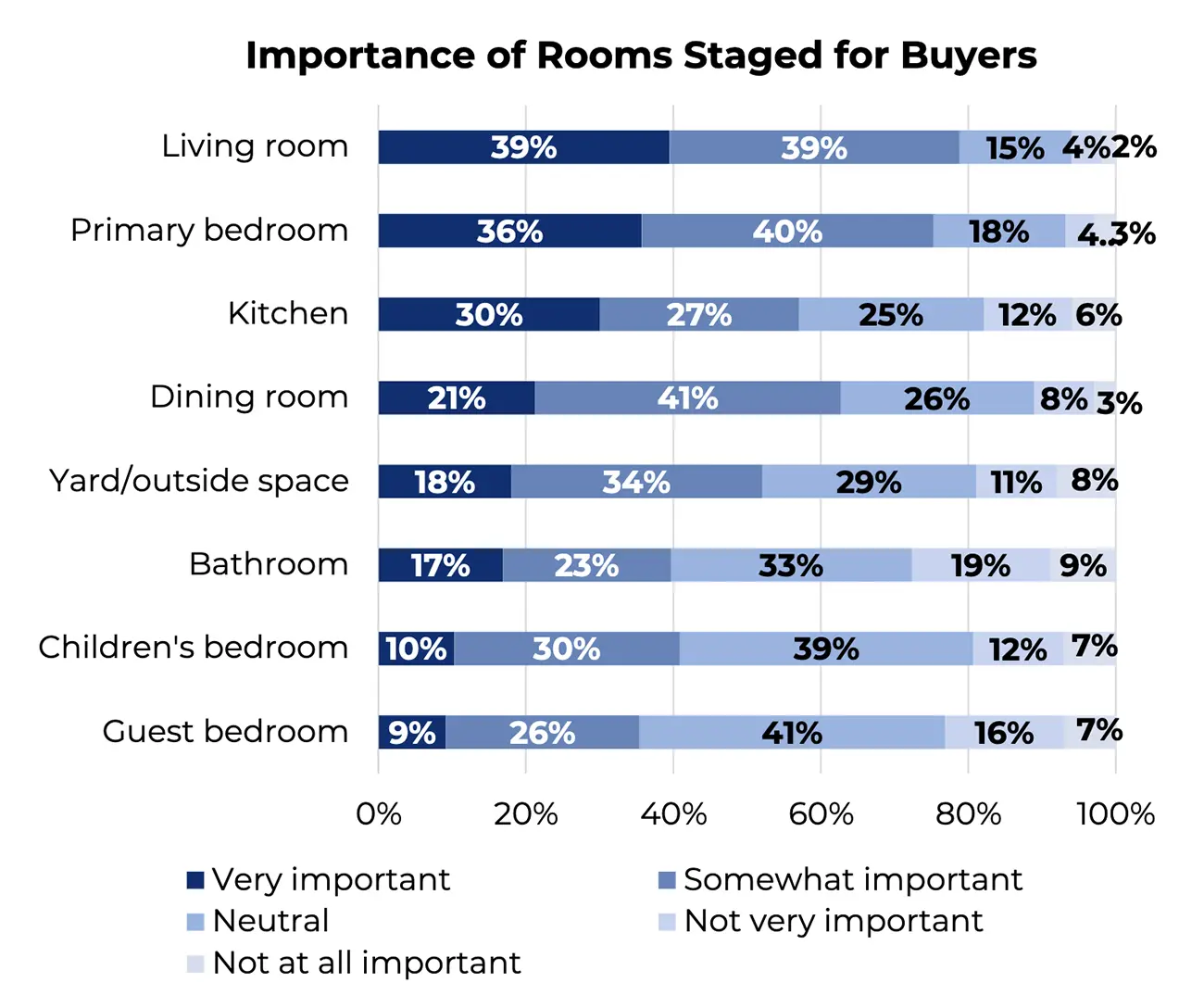
According to the National Association of REALTORS® 2025 Profile of Home Staging, buyers’ agents ranked the living room, primary bedroom, and kitchen as the most important rooms to stage. Those are the spaces where buyers are most likely to imagine their daily life in the home.
Priority 1
Living Room
This is often the emotional center of the home. Buyers want to know if the room feels comfortable, bright, welcoming, and easy to live in.
Priority 2
Primary Bedroom
The primary bedroom should feel calm, spacious, and restful. This is not the place for visual clutter, oversized furniture, or overly personal decor.
Priority 3
Kitchen
Kitchens do not always need a lot of decor, but they do need to feel clean, functional, bright, and move-in ready.
Living Rooms Matter, Especially in Seattle’s Darker Homes
In Seattle, natural light can be one of the biggest staging challenges. A living room that feels dark, crowded, or heavy in photos can cause buyers to hesitate before they ever schedule a showing. Good staging can help the room feel brighter, warmer, and easier to imagine as a comfortable gathering space.
Kitchens Should Feel Clean, Simple, and Usable
Kitchen staging is usually about restraint. Buyers want to see counter space, storage, surfaces, appliances, and overall condition. Too much decor can make the room feel smaller or distract from what buyers are actually evaluating.
My Practical Rule of Thumb
Start with the spaces buyers care about most, then look for rooms that need clarification. If a room is small, dark, oddly shaped, empty, or being used in a confusing way, staging can help buyers understand its purpose.
Also Worth Considering
- Entryway or foyer
- Dining room
- Home office or flex space
- Finished basement
- Outdoor living areas
Usually Lower Priority
- Secondary bedrooms
- Kids’ rooms
- Storage rooms
- Garages
- Utility spaces
The right staging plan depends on the home. A vacant condo may need a different approach than an occupied Craftsman, a luxury home, a townhome, or a property with an unusual layout. The goal is to invest attention where it will help buyers understand and connect with the home most quickly.
Source: National Association of REALTORS® 2025 Profile of Home Staging .
Budget-Friendly Prep
Quick and Affordable Home Staging Tips
Not every home needs full professional staging. Sometimes the biggest improvements come from simple, affordable changes that help the home feel cleaner, brighter, larger, and more intentional.
Before spending money on furniture, decor, or updates, start with the basics. These are the things buyers notice immediately in photos and during showings.
1. Declutter First
Buyers need to see the home, not the seller’s belongings. Clear counters, shelves, closets, tabletops, and floors so the rooms feel more spacious and peaceful.
2. Deep Clean Everything
Cleanliness affects buyer confidence. Pay special attention to kitchens, bathrooms, floors, windows, baseboards, light switches, appliances, and entry areas.
3. Improve the Lighting
Open curtains, clean windows, replace dim bulbs, and add lamps where rooms feel dark. In Seattle, lighting can make a major difference in how warm and inviting a home feels.
4. Edit the Furniture
Too much furniture can make a room feel smaller. Remove pieces that block walkways, windows, fireplaces, or focal points.
5. Neutralize Distractions
Buyers do not need the home to be bland, but they do need to focus on the property. Tone down strong personal decor, family photos, collections, and highly specific design choices.
6. Give Every Room a Purpose
If a room is being used as storage, a catch-all space, or a mix of unrelated functions, buyers may feel confused. Stage each room so its purpose is immediately clear.
The Goal Is Not Perfection
The goal is to remove friction for buyers. You want the home to feel easy to understand, easy to walk through, easy to photograph, and easy to imagine living in.
Quick Staging Tips in Action
These short videos show how simple staging adjustments can change the way a home feels to buyers.
These small changes may not feel dramatic individually, but together they can make a home feel more polished, more spacious, and more buyer-friendly. That is often the difference between a buyer walking through quickly and a buyer slowing down long enough to imagine living there.
Choosing the Right Staging Plan
Professional Staging vs. DIY Staging: Which Is Right for You?
One of the most common questions sellers ask is whether they need professional staging, or whether they can prepare the home themselves. The answer depends on the home, the price point, the existing furniture, the layout, and how buyers are likely to experience the property online and in person.
Staging is not one-size-fits-all. Some homes benefit from full professional staging. Others simply need editing, cleaning, better lighting, and a clearer sense of purpose in each room.
Option 1
Professional Staging
Professional staging usually means bringing in furniture, art, rugs, bedding, lighting, and accessories to create a polished look for photos, showings, and open houses.
This may make sense when:
- The home is vacant
- The rooms feel awkward or hard to understand
- The property is in a higher price range
- The existing furniture does not photograph well
- The home needs warmth, scale, or a stronger emotional pull
Option 2
DIY or Owner-Occupied Staging
DIY staging usually means using what you already own, then editing the home so it feels cleaner, calmer, brighter, and more buyer-friendly.
This may work well when:
- The home is already nicely furnished
- The furniture fits the rooms well
- The decor is fairly neutral and current
- The seller is willing to declutter and edit
- The home only needs small changes to feel show-ready
My Approach
I do not believe sellers should spend money just for the sake of spending money. The goal is to identify the specific changes that are most likely to improve buyer perception, online presentation, and overall marketability.
How I Help Sellers Decide
Before making a staging recommendation, I look at the home the way a buyer will see it. That includes the photos, the first impression at the front door, the room flow, the natural light, the furniture placement, and any spaces that might cause confusion.
The Photos
Will the home stop buyers from scrolling, or will it blend in with everything else online?
The Layout
Are buyers going to understand how the rooms function, or will they feel unsure?
The Competition
How does this home compare to other active listings in the same price range and neighborhood?
The Likely Buyer
What does this buyer need to see in order to feel confident and excited about the home?
In many cases, the best answer is a hybrid approach. We may professionally stage the main living areas, while using the seller’s existing furniture in bedrooms or secondary spaces. Or we may skip full staging and focus instead on decluttering, deep cleaning, fresh linens, better lighting, and strategic furniture placement.
Common Seller Questions
Home Staging FAQs
Every home is different, but these are some of the most common staging questions I hear from Seattle-area sellers.
Do I need to stage every room?
Usually, no. The best strategy is to focus first on the rooms that matter most to buyers, such as the living room, primary bedroom, kitchen, dining area, and any spaces that are hard to understand without furniture or visual context.
Can I use my own furniture?
Yes, in many cases. If your furniture fits the rooms well, photographs nicely, and helps the home feel clean and inviting, we may be able to use what you already have. Often, the biggest changes are removing extra pieces, rearranging furniture, simplifying decor, and improving lighting.
Is staging more important for vacant homes?
Vacant homes often benefit from staging because empty rooms can feel smaller, colder, or harder to understand. Furniture helps buyers see scale, layout, and purpose. This can be especially helpful for condos, townhomes, older homes, and rooms with unusual shapes.
How much does home staging cost?
The cost depends on the size of the home, the number of rooms being staged, whether the home is vacant or occupied, and how long the staging will be needed. Before recommending staging, I like to look at the home, the likely buyer, the competition, and the expected impact on presentation.
Should I stage before photos?
Yes. The online photos are often the buyer’s first impression of your home. Staging, cleaning, decluttering, and lighting improvements should be completed before professional photography whenever possible.
Can staging help a small home or condo?
Yes. In smaller spaces, staging can be especially helpful because buyers need to understand scale. The right furniture placement can show that a room is functional without making it feel crowded.
Does staging guarantee a higher sale price?
No. Staging does not guarantee a higher price or a faster sale. Pricing, location, condition, market timing, buyer demand, and marketing all matter. Staging is one part of the overall strategy to help the home make a stronger impression.
What if I am living in the home while selling?
Owner-occupied homes can still be staged. The plan usually focuses on simplifying, pre-packing, rearranging furniture, reducing visual clutter, and creating a realistic system for keeping the home show-ready while it is on the market.
Still Not Sure What Your Home Needs?
That is normal. The right staging plan depends on your home, your timeline, your budget, and your likely buyer. A thoughtful walk-through can help you decide what is worth doing, what is optional, and what may not be necessary.