
Is now a good time to buy a condo in Seattle? Seattle condo prices dropped 9.3% year over year in April 2026, and inventory hit its highest April level since 2012, so buyers genuinely have more room to negotiate than they’ve had in over a decade. But the discount isn’t free money. Before you buy, you need to check the building’s HOA financials, reserve study, and litigation status, because those determine whether you can even get a loan, not just whether you like the unit.
If you’ve been watching Seattle condo listings and noticing more units, longer time on market, and sellers who seem more willing to talk, you’re not imagining it. The data backs it up. This is the most buyer-friendly condo market Seattle has seen in years.
That’s genuinely good news if you’ve been priced out of the single-family market. It’s also a market where the mistakes are more expensive than the discount, because a condo purchase isn’t just a bet on the unit — it’s a bet on the financial health of a building you don’t control. Let me walk you through what’s actually happening and what I check before I let a buyer write an offer.
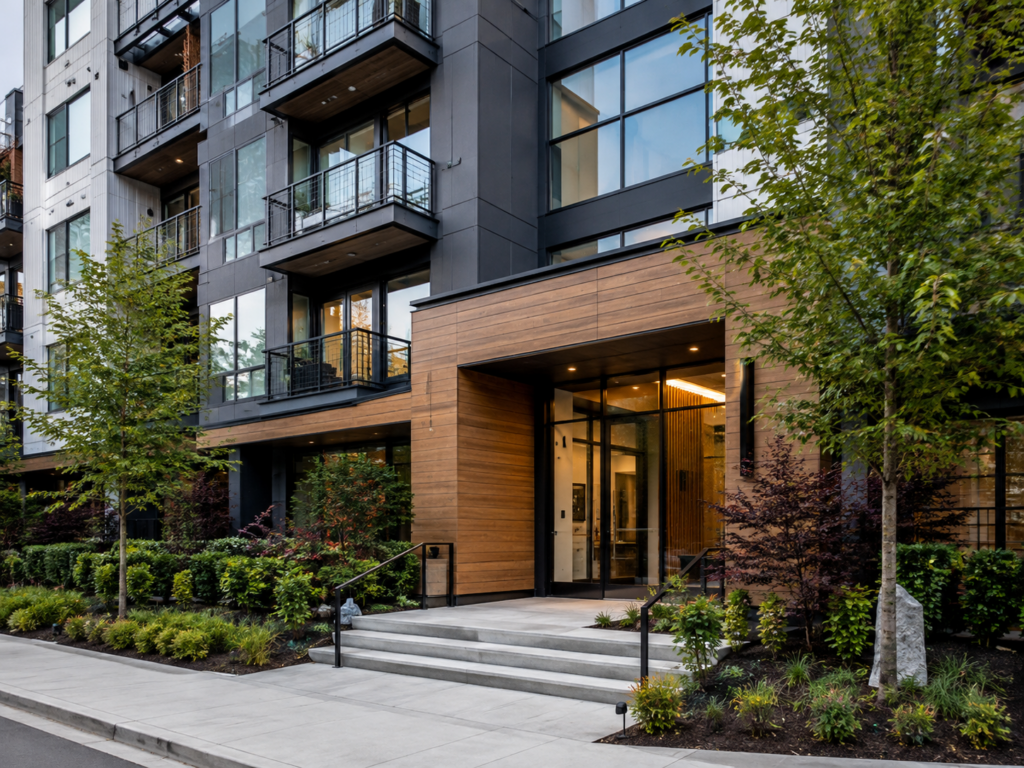
Where Seattle’s Condo Market Stands Right Now
Seattle’s condo segment has cooled more than the rest of the housing market this year, and the numbers are specific.
In April, Seattle’s condo median price dropped 9.3% compared to a year earlier, according to Homes.com’s Seattle Housing Market Report. At the same time, months of supply for condos climbed to 5.4 — the highest April reading for that property type since 2012.
The Madrona Group’s June 2026 Seattle Housing Market Update, covering May activity, shows the same trend holding. Seattle condo prices averaged $659,441, down 3.7% year over year, with condo inventory sitting at 6.0 months of supply. Compare that to residential single-family homes in the same report, which had just 3.0 months of inventory and prices that were actually up 8.7% year over year. That’s two very different markets running side by side in the same city.
| Metric | Condos | Residential homes |
|---|---|---|
| Avg. price, May 2026 | $659,441 (-3.7% YoY) | $1,254,360 (+8.7% YoY) |
| Months of inventory | 6.0 | 3.0 |
| List-to-sale price ratio | 98.6% | 101.6% |
Source: The Madrona Group, Seattle Housing Market June 2026 Update
That list-to-sale ratio matters. At 98.6%, condo buyers are routinely closing below asking price, something that was rare a few years ago. Sellers are negotiating on price, on closing costs, and increasingly on concessions like rate buydowns.
For a buyer, this is real leverage. It also means you’re stepping into a segment of the market that’s softening for reasons — remote work shifting demand toward houses with home offices and outdoor space, high HOA dues eating into affordability, and buildings carrying more scrutiny than they used to. Understanding why the discount exists helps you tell the difference between a genuinely good opportunity and a building you should walk away from.

Why the Discount Isn’t Free Money
Here’s the thing sellers and buyers both need to understand about this market: a lower price on a condo doesn’t automatically mean a better deal. Buyers are adding up the full monthly cost now, not just the mortgage.
Principal and interest is only one line item. On top of that, you’re paying property taxes, homeowners insurance, and HOA dues, which in Seattle typically run $400 to over $1,000 a month depending on the building’s age, amenities, and how well-funded its reserves are. A condo priced $50,000 lower than a comparable unit can still cost you more per month if its HOA dues are high enough.
That’s exactly why buyers are scrutinizing buildings more closely than they did in 2021 or 2022:
- Reserve study and HOA financial health. This is the building’s long-term savings account for major repairs — roofs, elevators, siding, parking structures. If reserves are underfunded, you’re looking at a future special assessment, and there’s no way to know that from the unit’s listing photos.
- Pending or recent litigation. Buildings suing their developer over construction defects are common in buildings under 10 years old, and it isn’t automatically a red flag. But it can make the building non-warrantable for financing, which affects you directly (more on that below).
- Rental caps and pet policies. If your plans change and you need to rent the unit out someday, a building already near its rental cap limits that option.
- Insurance status and claims history. Rising insurance costs are hitting condo buildings hard right now, and a building with a difficult claims history can see premiums — and dues — jump.
- Upcoming special assessments. Ask directly. HOAs are required to disclose pending or planned assessments, but you have to ask for the resale certificate and HOA meeting minutes to find them.
None of this means avoid condos. It means the building matters as much as the unit, and in this market, sellers and their agents are expected to have this paperwork ready before you even tour.
Have questions about a specific building you’re considering? Text HOME to 206-245-8813 or book a time to talk it through — I’ll tell you honestly what I see.
Why “Warrantable” Matters More Than It Used To
This is the part that catches first-time condo buyers off guard: not every condo qualifies for a normal mortgage.
Lenders selling loans to Fannie Mae and Freddie Mac have to confirm the building, not just you, meets their eligibility standards before they’ll finance a unit in it. A building that fails that review is called non-warrantable, and it limits your financing to portfolio loans, which typically mean a larger down payment and a higher interest rate. Fannie Mae’s own project standards lay out what they’re checking: the building’s financial stability, insurance coverage, owner-occupancy rate, and litigation status, among other factors.
In practical terms, this means:
- Ask about warrantability before you fall in love with a unit. Your lender can run a project questionnaire on the building early in your search, not after you’re under contract.
- A great price on a non-warrantable unit can still be a bad deal once you factor in the financing terms you’ll actually qualify for.
- This is a building-level issue, not a unit-level one. Two identical units in the same building have the same warrantability status.
I walk every condo buyer through this before we tour, because finding out during escrow is one of the most common ways a good deal falls apart at the worst possible time.
Is This the Right Time for You?
The citywide numbers tell you the market is buyer-friendly. They don’t tell you whether this is the right building, or the right time, for your situation.
Buying now may make sense if…
- You’ve done the HOA and reserve study homework and the building checks out
- You’re planning to stay long enough to ride out a softer market — 5+ years is the general rule of thumb
- You’ve confirmed financing and warrantability with your lender upfront
- You’ve compared the full monthly cost (mortgage + taxes + insurance + HOA), not just the list price, against renting
Waiting may be worth considering if…
- You’re not sure how long you’ll stay in the area
- The building you like has red flags in its reserves or litigation history that you’re not comfortable with
- You haven’t confirmed you can get conventional financing on the specific building
- You’d rather watch a few more months of data before committing
The honest answer is that it depends on the building and on you — the citywide averages are a starting point for the conversation, not the whole answer. That’s true whether you’re the one buying or the one selling in this market; I wrote about the seller’s side of this same shift in Selling a Seattle Condo in 2026: What to Know, if you want to see how sellers in this same market are thinking about pricing and strategy.
Ready to talk through whether a specific Seattle condo makes sense for you? Book a call and I’ll give you an honest read on the building and the numbers — no pressure, just a straightforward conversation.
Or text HOME to 206-245-8813, or visit HomeProAssociates.com to browse listings.
About Emily Cressey Emily Cressey is a REALTOR®, Broker, and Team Lead at HomePro Associates, affiliated with Keller Williams Greater Seattle. She has served buyers, sellers, and investors throughout King and Snohomish counties for over 20 years, specializing in investment properties, rental properties, luxury homes, and residential real estate. Emily holds designations as a Certified Probate Real Estate Agent (CPREA) and KW Real Estate Planner. WA Real Estate License #201093099 · Verify at WA DOL Reach her at 206-245-8813 or HomeProAssociates.com.