
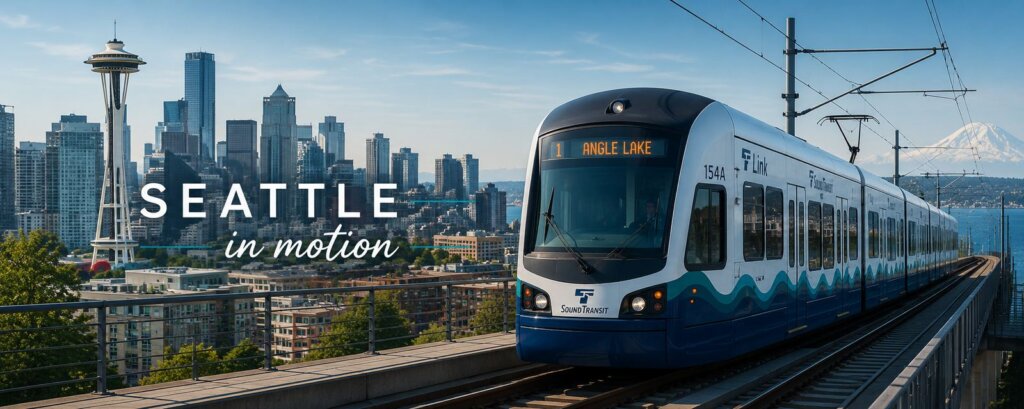
How does the new light rail expansion affect Greater Seattle home prices in 2026?
The 2 Line officially connected the Eastside to Seattle on March 28, 2026, and the Lynnwood Link extended the 1 Line into Shoreline, Mountlake Terrace, and Lynnwood in 2024. Homes within a 10-minute walk of stations typically sell for 8 to 12 percent more than comparable homes farther out, according to national transit research. In Greater Seattle, the strongest near-term price effects are showing up in Bellevue, Redmond, Shoreline, and Mountlake Terrace, with rapid redevelopment near every station.
You probably already know the headline. After years of construction (and a few delays), the Sound Transit 2 Line officially crossed Lake Washington and connected the Eastside to downtown Seattle on March 28, 2026. Opening-day ridership topped 200,000.
What you may not know is what that means for your specific situation. If you’re thinking about buying near a station, selling a home in a station-adjacent neighborhood, or relocating to one of these areas from out of state, the calculus has shifted in some real ways. Let’s walk through it.
What’s Actually Connected Now
Two pieces matter for Greater Seattle buyers and sellers.
The 2 Line (Eastside). Now runs end-to-end from Lynnwood City Center, through downtown Seattle, across I-90 and Lake Washington via Mercer Island, into downtown Bellevue, and out to Downtown Redmond. New stations along the cross-lake stretch include Judkins Park (south Seattle) and Mercer Island. The full corridor is open for daily passenger service.
The 1 Line (Lynnwood Link extension). Opened in August 2024, this added four stations in north King and south Snohomish counties: Shoreline South / 148th, Shoreline North / 185th, Mountlake Terrace, and Lynnwood City Center. This is the line that directly serves three of the neighborhoods I work in most often.
If you’re a North Seattle / North King County buyer or seller, the Lynnwood Link is your line. If you’re an Eastside buyer or seller, the 2 Line is yours. And if you’re relocating into the area from somewhere else, both lines now make a “live in one part of the metro, work in another” arrangement actually viable in a way it wasn’t five years ago.
What the Data Says About Prices Near Stations
Two patterns are showing up consistently in 2026.
First, the premium. National research from the American Public Transportation Association (and confirmed by Sound Transit’s own analysis) puts the price premium for homes within a 10-minute walk of a light rail station at roughly 8 to 12 percent over comparable homes farther out. That’s an average. Some Bellevue and Redmond submarkets are seeing more, especially condos and townhomes pitched at tech workers who want car-free options.
Second, the redevelopment wave. Within a half-mile of the four Lynnwood Link stations (Shoreline South, Shoreline North, Mountlake Terrace, Lynnwood City Center), the total number of apartment units built or in the development pipeline has already passed 10,000. That’s not a typo. Single-family inventory near these stations is getting absorbed into mixed-use density at a rate the area has never seen before.
For sellers near a station: the buyer pool is different now. You’re selling not just to families but to commuters who explicitly want to walk to transit. For buyers near a station: expect to compete harder on starter and townhome inventory, and to pay a measurable premium for true walking-distance proximity. (If you’re researching the broader Shoreline market context, my Shoreline relocation guide covers neighborhoods, schools, and what to expect.)
What “Walking Distance” Actually Means in Greater Seattle
Here’s where the local read matters. A home can be “close to light rail” on a map and still feel cut off in real life if it’s on the wrong side of a busy arterial, lacks safe sidewalks, or sits behind a sound wall. Buyers in 2026 notice this much more than they did during the frenzy years.
The strongest pricing signals are showing up on:
- Homes within 0.3 miles (a 6 to 8 minute walk) of a station entrance with continuous sidewalks the whole way.
- Homes on residential streets parallel to or perpendicular to the station, not on a multi-lane arterial.
- Homes near stations that have walkable destinations beyond the platform (a coffee shop, a grocery store, a small commercial node).
The weakest premium shows up on homes that are technically “near” a station but require crossing a six-lane road to get there. Those properties haven’t seen the same lift, even though Zillow and Redfin will both tag them as “near transit.”
If you’re buying near a station, walk the route from the front door to the platform yourself before you write an offer. Time it. Notice the crosswalks. That ten-minute walk on Google Maps is sometimes a fifteen-minute slog with two long lights. Other times it’s genuinely four minutes door to platform. The difference shows up in your daily life and in your eventual resale value.
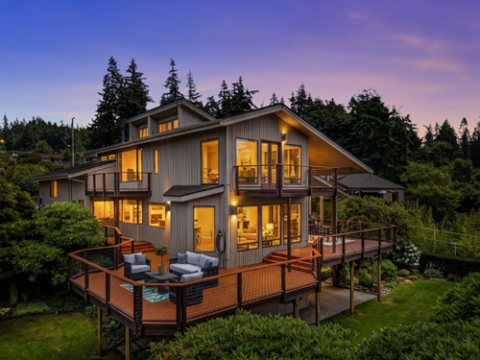 Sold
Sold
- $1,900,000
- 4 bd
- 2.5 ba
- 3,619 sqft
Luxury Edmonds Home with Sound Views & Private Cul-de-sac
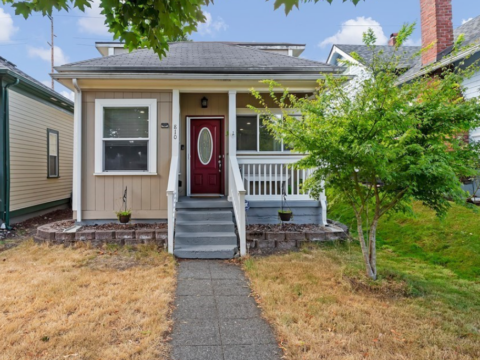 Sold
Sold
- $416,000
- 3 bd
- 1 ba
- 1070 sqft
3-Bed Home with Bonus Room & Detached Shop in Tacoma, WA
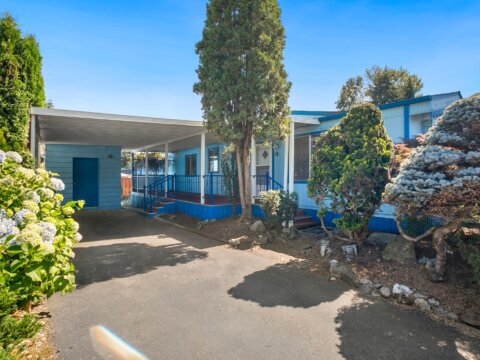
- $69,900
- 2 bd
- 1 ba
- 730 sqft
2-Bedroom Manufactured Home at The Pointe at Lockwood, Bothell WA
What This Means for Sellers in Shoreline, Mountlake Terrace, and Lynnwood
If you’ve owned a home in one of these three cities for more than five years, your equity story has improved meaningfully. The transit-driven appreciation, plus the broader Greater Seattle market recovery, plus the Snohomish County housing demand, all stack favorably for you.
Three things to think about before you list:
One: pricing strategy. Comps from before the line opened are misleading now. Your agent should be pulling 2026 comps only, weighted toward homes within a half-mile of the same station as yours. The pre-2024 comps undersell your home by a meaningful margin.
Two: marketing the proximity. If you’re within a 10-minute walk of a station, that should be in your headline, your photos, and your description. A station-adjacency map in your listing photos isn’t a gimmick anymore. It’s the buyer’s primary search criterion.
Three: timing the move. If you’re selling a North King or south Snohomish home and buying somewhere else in the metro, the sequencing question is bigger now because the buyer pool is so different by submarket. My Shoreline rent vs. buy breakdown covers some of the finer trade-offs if you’re in the planning phase.
What This Means for Buyers (Especially Relocators)
If you’re moving to Greater Seattle from out of state, the new connectivity changes which neighborhoods are even on the table for you.
You can now realistically:
- Live in Lynnwood (where your money buys more square footage) and reverse-commute by train to a downtown Seattle or downtown Bellevue office.
- Live in Shoreline near 148th or 185th and reach the airport, downtown Seattle, or the Eastside without ever sitting in I-5 traffic.
- Live near Downtown Redmond and commute to Seattle in under 35 minutes door to door.
- Live in central Bellevue and reach Capitol Hill in 18 minutes.
None of those configurations were realistic in 2019. All of them are now. (My 10 Reasons People Are Moving to Seattle piece walks through how the area’s appeal stacks up for relocators.) For tech workers in particular, the calculus around where to put down roots in this region has fundamentally changed.
That said, the math isn’t free. The premium for station-adjacent inventory is real. If you don’t actually need the train (you work from home, you drive everywhere anyway), you can save 8 to 12 percent by going slightly further out. The question is honestly how often you’ll use it.
What I Tell My Clients Before They Decide
When a client asks about transit-adjacent buying or selling, we run a three-step conversation before any specific houses come up.
Step one. What’s your actual commute pattern, and how often do you take it? If you’re going downtown three days a week, transit access changes your life. If you’re remote and just want optionality, the premium is harder to justify.
Step two. What does the half-mile and quarter-mile inventory look like at your price point right now? Some price bands have lots of options. Others have almost nothing.
Step three. If you’re selling, what’s your home’s actual position relative to the closest station? Walking-route mapping, not crow-flies distance.
Once we have those three answers, the right strategy usually picks itself.
Frequently Asked Questions
How much more do homes near light rail actually sell for in Greater Seattle?
National research suggests an 8 to 12 percent premium for homes within a 10-minute walk of a station. In Greater Seattle’s strongest submarkets (Bellevue downtown, Capitol Hill, parts of Shoreline near the new stations), the local premium can run higher for condos and townhomes specifically. Single-family premiums tend to be more modest, in the 5 to 10 percent range.
I bought my Shoreline home before the Lynnwood Link opened. Did my home appreciate because of it?
Most likely yes, especially if you’re within a half-mile of the 148th or 185th station entrances. The lift isn’t always immediate or obvious because broader market conditions also move prices, but the transit premium is now baked into your equity.
Should I buy in Bellevue or Redmond now that they’re connected to Seattle?
Both have benefited. Bellevue’s downtown core has seen the most dramatic redevelopment and price growth. Redmond offers more square footage per dollar and is growing quickly around the Downtown Redmond station. The right choice depends on your price point, your work location, and your preference for urban density vs. suburban scale.
Will the next round of light rail expansion change my neighborhood?
If you live near a planned future station (West Seattle Link, Ballard Link, the South Sounder extensions), expect a similar pattern: redevelopment near stations, density increases, and price premiums for walkable proximity. The timeline matters because some of those projects are still 5+ years out.
Can I tell from a listing photo whether a home is genuinely walkable to a station?
Not reliably. Use Google Street View to walk the actual route. Check for sidewalks the whole way. Notice arterial crossings. Time it. The “walking distance” claim in real estate listings is sometimes accurate, sometimes wishful thinking.
Putting It Together
Light rail has reshaped which Greater Seattle neighborhoods make sense for which buyers and sellers in 2026. If you’re thinking about a move (in or out of a station-adjacent area, in either direction), the right next step is a conversation grounded in the actual data for your specific corridor.
Grab my free “Seattle Relocation Guide” PDF for a deeper look at how neighborhoods compare, including transit access, schools, and lifestyle factors. It’s free and you can download it directly from HomeProAssociates.com.
If you’d rather just talk through your specific situation, text HOME to 206-245-8813 and I’ll get back to you with the right neighborhood read for your timeline. Or book a free 20-minute call on my calendar.
For deeper Sound Transit ridership and route data, the official 2 Line page is the authoritative source. (And if you’re a first-time North Seattle buyer just starting your search, my letter to a first-time buyer in North Seattle is a softer-entry read.)
Greater Seattle has a different shape in 2026 than it did even three years ago. The metro is now genuinely connected. That’s a real opportunity if you plan around it.
