
Should I sell my Eastside luxury home now?
If you plan to sell within the next 18 months, moving sooner is the stronger position. Eastside months of supply recently hit a 15-year high and the median price has slipped about 4% year over year, which means every quarter you wait adds competition rather than removing it.
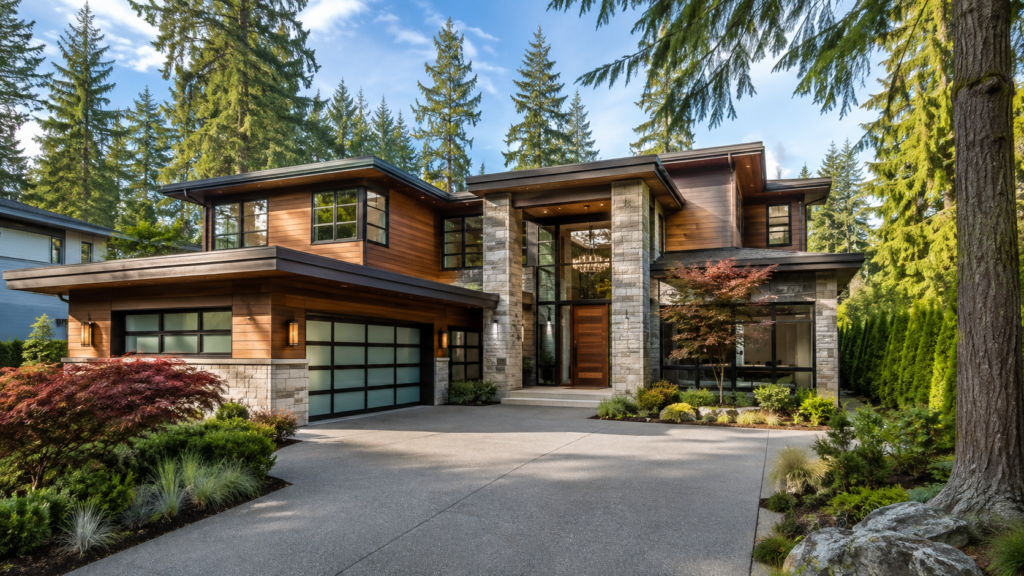
Eastside luxury sellers face more competition this year than in any year since 2011.
If you own a home on the Eastside in the $1.5 million and up range, you have probably noticed something on your evening walk. More signs. Signs that have been up a while.
You are not imagining it. The Eastside luxury market has gone through the most dramatic inventory shift of any segment in the Puget Sound region this year, and the pace of that shift accelerated over the spring rather than settling down.
I want to be careful here, because this is not a crash story and I am not going to sell you one. Well-presented Eastside homes are still selling, some of them fast. Bellevue in particular has continued to move at a pace most of the country would envy. But the conditions that let sellers name a number and wait for it have changed, and if you are thinking about listing, the calculation is different now than it was even six months ago.
I’ve been involved in real estate since 2002 and licensed as a REALTOR® for eight years, working across King and Snohomish counties. Here is what I would want to know if this were my house.
What Eastside Luxury Inventory Actually Looks Like Now
| Source | Eastside inventory | Months of supply | Median |
|---|---|---|---|
| Urban Living (June) | +44% YoY | 4.7 mo, 15-year high | $1,720,000, -4% |
| Windermere local update (July, June data) | +29% YoY | 3.3 mo, 10-year high | $1,560,000, -3% |
| Q2 2026 brokerage review | new listings +10% | 3.7 mo, 6-year high | down, no figure |
Those three numbers together tell the whole story, and it is the sequence that matters.
Inventory started climbing first. First-quarter Eastside luxury reporting showed active listings rising roughly 62% year over year, jumping from around 600 properties to around 975, while months of supply moved to about 3.3. At that stage pricing held firm. The median sat near $1.475 million, essentially flat against the prior quarter, and the market was still technically seller-favorable because anything under four months of supply is.
That is no longer where we are. By June, Eastside months of supply had climbed to roughly 4.7, which is past the neutral threshold and the highest reading in about 15 years. The median moved to approximately $1,720,000, down around 4% from the prior year. Prices followed supply, on the usual delay.
Here is the pattern I have watched play out repeatedly: inventory rises, sellers hold their prices, days on market stretch, and then two or three quarters later the closed sale numbers finally reflect what was already happening on the ground. We are now in the part of the cycle where the closed numbers have caught up.
Figures compiled from Northwest Multiple Listing Service reporting, independent Eastside broker market tracking, and quarterly Eastside luxury market analysis, covering Q1 through June 2026.

Bellevue and Kirkland Are Not the Same Market
This is where citywide averages stop being useful. Two of the Eastside’s strongest luxury submarkets are behaving quite differently, and which one you are in should change your entire listing strategy.
| Market | Median Sale Price | Median Days on Market |
|---|---|---|
| Bellevue | $1.575M | 10 days |
| Kirkland | $1.295M | 29 days |
| Mercer Island | $2.0M | 7 days |
Redfin market data, February 2026. Luxury submarket medians move on small sample sizes, so treat these as directional. Mercer Island in particular can swing month to month.
Bellevue homes averaged around three offers and went pending in roughly a week. Kirkland, a market most people would describe as comparably desirable, took nearly three times as long to sell. Same region, same quarter, very different seller experience.
What drives that gap:
- Employer proximity. Bellevue has absorbed a wave of corporate relocations and its buyer pool is anchored to offices within a short drive.
- Inventory composition. Kirkland has more waterfront-adjacent and view-premium product, which is a smaller, slower, more discretionary buyer pool by nature.
- Price band depth. The $1.4M to $2.0M single-family band remains the deepest and fastest-moving segment on the Eastside. Above roughly $2.5M, buyers are deliberate and the days-on-market math changes completely.
- Condition sensitivity. In a supply-rich market, a dated kitchen no longer costs you a negotiation. It costs you the showing.
If your home sits in Redmond, Sammamish, or Woodinville, the same principle applies. Pull the numbers for your specific submarket and price band before you anchor on a listing price, because the Eastside average will mislead you in one direction or the other.
What Rising Inventory Actually Does to Your Listing
Sellers tend to think of competition as a price problem. In a luxury market it is more often a time and attention problem that becomes a price problem later.
You lose the first two weeks
A luxury listing gets its highest-quality buyer traffic in its first ten to fourteen days. That is when the buyers who have been watching that submarket for months see it. Price above the market and you spend that window filtering out your best prospects, then reduce later to an audience that has already scrolled past you.
Cumulative days on market follows you
Buyers and their agents see the full history, including relisting. A home at 90 cumulative days gets offers written differently than the same home at 12 days, regardless of what the property is worth. Withdrawing and relisting to reset the clock is transparent to anyone paying attention.
Your competition sets your ceiling
With supply at a 15-year high, your buyer is not deciding whether to buy your house. They are deciding between your house and four others, several of which may be better prepared. Things that separate listings when there is choice:
- Pre-listing inspection completed and disclosed, which removes the buyer’s main renegotiation lever
- Systems documentation, including roof, HVAC, electrical panel, and any recent major work with receipts
- Professional staging and photography, which is table stakes at this price point rather than an upgrade
- Flexible showing access, because a home that is difficult to see is a home that gets skipped when there are alternatives
- Realistic pricing from day one, which remains the single largest factor in whether a luxury listing sells or sits
The uncomfortable version: in a market with under two months of supply, an overpriced home eventually sells because buyers run out of options. At 4.7 months, buyers do not run out of options. They wait for you to reduce, and then they negotiate from your reduced number rather than your original one.

Should You Sell Now, or Wait?
I will not tell you there is a single right answer, because there is not. But I can tell you how I frame it with clients.
Reasons to move sooner
- You are selling within 18 months regardless. If the move is happening, waiting adds competing inventory rather than removing it. Supply has grown for consecutive months, not spiked once.
- Rates have improved from last year’s levels, which has expanded the qualified buyer pool at the upper end. That is a demand-side tailwind that may not persist.
- Your home shows well right now. Condition advantages are worth more in a supply-rich market than they were in a scarce one.
- You are buying in the same market. If you sell into softness and buy into softness, the spread is what matters, not the absolute numbers. A move-down or lateral move can pencil better now than it did at peak.
Reasons to wait
- You have no timeline and no reason to move. Eastside fundamentals remain strong long term, with a durable employment base and constrained buildable land.
- Your home needs significant work and you can complete it before listing. Deferred maintenance is penalized harder now, so fixing it first may return more than listing as is.
- You would be selling into a season with thin buyer traffic. Late fall and December are usually the wrong entry point at this price level.
- You are relying on a specific number to make your next purchase work. If the math only works at last year’s peak price, the plan needs revisiting before the listing does.
The one framing I would push back on is waiting for the market to come back to a number you saw a neighbor achieve in 2024. That comp existed in a market with a fraction of today’s supply. Pricing to a past market is the most expensive mistake I see Eastside sellers make, and it costs more in a softening market than it ever did in a rising one.
Let’s Look at Your Specific Numbers
Every point above is a regional average, and your house is not an average. What matters is your submarket, your price band, your condition relative to what is currently active within a mile of you, and how many of those competing listings are priced ahead of or behind reality.
That is a specific analysis, and I would rather run it for you than have you make a seven-figure decision off a blog post, including this one.
Two ways to get started
Download The Luxury Seller’s Checklist, a pre-listing walkthrough covering pricing strategy, preparation priorities, and the documentation that shortens negotiations. Get the checklist here.
Or book a call and I will pull the current active, pending, and sold comparables for your specific Eastside submarket and walk you through where your home sits. Text HOME to 206-245-8813 or schedule a time here.
Emily Cressey is a REALTOR®, Broker, and Team Lead at HomePro Associates, affiliated with Keller Williams Greater Seattle. She’s been involved in real estate since 2002, first as an investor, and has been a licensed REALTOR® for a total of 8 years, serving buyers, sellers, and investors throughout King and Snohomish counties, Washington State. WA Real Estate License #201093099.