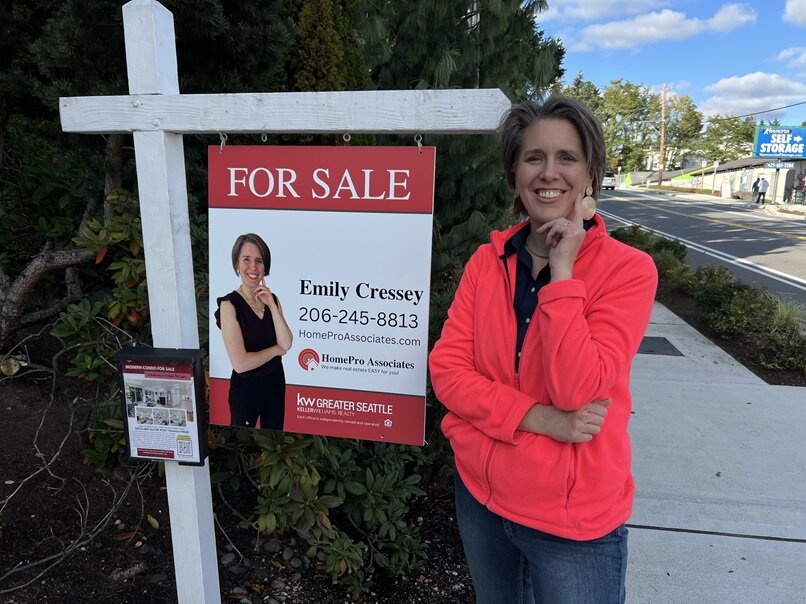
If your family is relocating for a Seattle tech job, you are in the right place. I work with Amazon, Microsoft, Google, and Meta families every week, and I know how overwhelming it can feel to choose a neighborhood, compare schools, decode commute times, and decide whether to rent first or buy right away. My goal here is to make the process calm and clear so your move feels like a confident step.

As you move through the guide, you will learn how to compare school districts fairly, what to expect from housing types and prices in each area, and how commute patterns really work on the Eastside and in the city. I will also walk through financing considerations for families with RSUs or bonuses, and smart ways to rent first if you want to learn the lay of the land before buying. This section is your starting point for a Seattle tech job move that fits your lifestyle and timeline.
Seattle Snapshot
Seattle is still a true two-shore tech market. Amazon anchors South Lake Union and the Denny Triangle in Seattle, while Microsoft’s global headquarters spans 500+ acres in Redmond. Google’s footprint is centered in Kirkland and Seattle, and Meta has a major hub in Bellevue’s Spring District. That cluster keeps most tech commutes orbiting SLU, Redmond, Kirkland, and Bellevue.
On the job-market front, the Seattle–Tacoma–Bellevue metro has been running in the mid-4s for unemployment this summer, which is consistent with a healthy but cooling market and aligns with what my relocating buyers are feeling on the ground.
Earnings are strong by national standards. The latest ACS shows Seattle’s median household income around $122K, with King County similar. That helps explain why many families pursuing a Seattle tech job can stay competitive near major hubs, even with higher housing costs.
Taxes are a mixed bag that often surprises newcomers. Washington has no state personal income tax, which many tech families love. Day-to-day spending, however, carries one of the higher big-city sales tax rates: inside Seattle city limits the combined rate is 10.35% in Q3 2025. Property taxes are levy-based and vary by city and school district; a useful rule of thumb is that King County’s average effective rate sits in the ~0.8–0.9% range, but specific neighborhood levy rates can differ meaningfully year to year.
Housing has stabilized compared to the big swings of the last few years. As of July 2025, Seattle’s median sale price is about $880K; Bellevue is roughly $1.53M; and Snohomish County, a popular value play just north of the city, is about $760K. Inventory statewide has widened versus last year, which is giving buyers a bit more breathing room.
Transit keeps getting better for cross-lake commutes. The Link 1 Line now runs to Lynnwood, adding four stations north of Seattle, and the 2 Line “starter” segment between South Bellevue and Redmond Technology is open, which is a direct win for Microsoft-area commutes. The full 2 Line connection over I-90 into Seattle is currently projected for 2026.
And yes, the weather reputation is real but nuanced. Expect a lot of light-rain days and mild temperatures, with roughly ~147 rain-days a year on average and about 37–39 inches of annual precipitation. Summers tend to be pleasantly dry, which is when many new arrivals fall in love with the region.
Where Tech Families Live
Here’s how I help families narrow the map fast for a Seattle tech job: start with the four clusters below, then pressure-test each against commute, schools, and the kind of home that feels like “you.”
Eastside power cluster — Bellevue, Redmond, Kirkland, Sammamish, Issaquah
If proximity to Microsoft, Google, and Meta is priority one, this is the bullseye. Expect newer homes, strong school options, and prices that reflect demand. As of July 2025, median sale prices sit around $1.53M in Bellevue, $1.27M in Redmond, $1.35M in Kirkland, and $1.58M in Sammamish (Issaquah tends to track just under Sammamish depending on product and school boundary). These areas typically trade quickly, with July medians showing 15–28 days on market across most cities. The 2 Line light rail “starter segment” now connects Redmond Technology ⇄ South Bellevue with multiple Bellevue stations, which is a meaningful win for non-car commutes and kid-activity logistics.
Good fit: You want top academic options, newer construction, and an easy hop to Redmond, Kirkland, or Bellevue campuses.
North Seattle value cluster — Shoreline, Edmonds, Lynnwood, Bothell, Kenmore
North of the city blends larger lots and relative value with solid schools. July 2025 medians: Shoreline ~$800K, Edmonds ~$935K, Lynnwood ~$725K, Bothell ~$1.10M, Kenmore ~$1.10M. With the 1 Line extension to Lynnwood open (stations in Shoreline and Mountlake Terrace), tech families working downtown/SLU can ride rail, and Eastside commuters often mix HOV/SR-522/405 depending on schedule. If renting first is part of your plan, note that north-end rents tend to track under in-city hotspots; Seattle’s citywide median rent sits near $1,995 as of August 2025, with sub-markets like Belltown above that.
Good fit: You want space and a yard, access to parks and water, and a price point that stretches further than the core Eastside or city center.

In-city family favorites — Ballard, Magnolia, Queen Anne, West Seattle, Green Lake
City living trades lot size for walkability, parks, and shorter hops to South Lake Union and downtown. As a baseline, Seattle’s July 2025 median is about $880K, though neighborhood-level medians vary widely by product type (townhome vs single-family) and school boundary. Families who thrive here usually prize walk-to-everything convenience and weekend routines close to home. Light rail already links north Seattle to downtown/Sea-Tac, and many in-city buyers anchor their search to bike/transit corridors rather than drive times. Redfin
Good fit: You value walkability, parks, and being within a short ride of SLU—even if that means less yard and more vertical living.
South & southeast options — Newcastle, Renton, Maple Valley, Covington
These communities deliver newer homes, larger floor plans, and friendlier price points, with tradeoffs in commute length to SLU or the Eastside. July 2025 medians: Newcastle ~$1.85M, Renton ~$723K, Maple Valley ~$800K, Covington ~$650–700K (varies by ZIP). For Eastside commuters, I-405 access is key; for downtown/SLU, plan around I-5/I-90 and evolving light-rail connections (the full 2 Line across I-90 is slated after the current starter segment). Redfin+4Redfin+4Redfin+4
Good fit: You want more house for the budget—think bonus rooms and three-car garages—and you’re comfortable planning commute windows or hybrid schedules.
Schools and Education
Seattle’s tech corridor gives families real depth on schools. On the Eastside, Bellevue, Lake Washington (Kirkland/Redmond), Northshore (Bothell/Kenmore/Woodinville), and Issaquah all hold A to A+ overall district grades in Niche’s 2025 rankings; inside the city, Seattle Public Schools is A-, with Shoreline at A, Snoqualmie Valley at A, and Edmonds at B+. That high-level snapshot lines up with what I see on the ground: strong academics, lots of advanced coursework, and engaged PTAs—especially near major employers.


Beyond letter grades, families chasing a Seattle tech job usually want to know where advanced programs live. For IB, you’ve got Interlake High School in Bellevue (long-standing IB World School), Inglemoor High in Northshore (open to in-district and some out-of-district students), and International Community School in Kirkland (IB candidate, planning IB Diploma starting 2026–27). AP is widely available across the region. These pathways matter for college prep, especially for globally mobile teams.
Enrollment timing and boundaries are the next reality check. Seattle Public Schools opened 2025–26 registration on Jan 6 and ran its Open Enrollment/School Choice priority window Feb 1–28 (late applications through May 31). Each district posts boundary lookups—always verify a home’s assignment before you write an offer because lines do shift:
• Seattle address lookup & attendance maps.
• Lake Washington school/bus finder & boundary maps.
• Northshore address tool & boundary pages.
• Bellevue school locator & transfer policy.
Private options are strong too (UPrep, Holy Names, Bear Creek, etc.). Expect tuition to run higher in Seattle than the state average. Current aggregates show Washington statewide private-school averages around $15.7k (elem $15.5k; high school $17.5k), while Seattle’s average is ~$21.2k depending on neighborhood and school level. That aligns with what my relocating clients report when comparing parochial vs. independent schools.
For families with little ones, budget for childcare early. Washington consistently ranks among the more expensive states for infant care; recent snapshots put infant center-based care around $21,348/year statewide (and $38k+ for an infant + toddler combo). Child Care Aware’s 2025 affordability sheet and King County dashboard are great planning tools if you’re moving mid-year and need interim care near work.
School Ratings
| Area / District | Niche 2025 (District) | GreatSchools Top HS (Rating) |
|---|---|---|
| Bellevue (Bellevue SD) | A+ | Newport Senior High — 10/10 |
| Kirkland/Redmond (Lake Washington SD) | A+ | Lake Washington High — 10/10 |
| Northshore: Bothell/Kenmore/Woodinville (Northshore SD) | A+ | Woodinville High — 10/10 |
| Issaquah/Sammamish (Issaquah SD) | A+ | Issaquah High — 10/10 |
| Seattle (Seattle Public Schools) | A- | Roosevelt High — 10/10 |
| Shoreline (Shoreline SD) | A | Shorecrest High — 9/10 |
| Snoqualmie Valley (SVSD) | A | Mount Si High — 10/10 |
| Edmonds/Lynnwood/Mountlake Terrace (Edmonds SD) | B+ | Edmonds-Woodway High — 7/10 |
Commute and Transportation
For a Seattle tech job, most weekday travel orbits four hubs—South Lake Union/Downtown (Amazon), Redmond (Microsoft), Kirkland (Google), and Bellevue (Meta). Seattle is still a “plan-your-window” city: INRIX’s latest scorecard shows the region holding a U.S. top-10 congestion spot with drivers losing about 63 hours to traffic in 2024 as office trips ticked up again. Use that as a sanity check when you think about door-to-door time.
What’s new (and useful) on rail
- 1 Line (North–South): Lynnwood ⇄ Downtown ⇄ Sea-Tac/Angle Lake. The Lynnwood Link opened with four new stations (Shoreline South/148th, Shoreline North/185th, Mountlake Terrace, Lynnwood City Center). Trains generally run every ~8 minutes at peak and ~10 minutes midday/weekends. This is the go-to option for North Seattle/Snohomish families heading to SLU or Downtown.
- 2 Line (Eastside): South Bellevue ⇄ Downtown Redmond. The “starter” Eastside segment launched Apr 27, 2024, and was extended to Downtown Redmond on May 10, 2025 (adding Marymoor Village and Downtown Redmond stations). Trains typically run every 10 minutes, 16 hours/day; plan on roughly ~10 minutes Redmond Technology ⇄ Bellevue Downtown.
- Seattle–Eastside light-rail connection. The I-90 segment that links the 2 Line to Seattle is now testing powered trains on the floating bridge and is trending toward an early-2026 opening, per Sound Transit. Until then, buses and driving remain the cross-lake fallback.
Driving, carpools, and express lanes
- I-405 Express Toll Lanes (ETL). Carpools ride free with a Good To Go! Flex Pass when you meet occupancy rules (weekdays 3+ during peak hours; 2+ mid-day). Nights, weekends, and major holidays are free to all. This matters for Eastside–to–Eastside school/activities and hybrid work.
- SR-520 bridge tolls (Seattle ⇄ Eastside) and SR-99 tunnel (North–South bypass of Downtown) vary by time of day and are cheaper with a Good To Go! account. Rates were adjusted in 2024–2025; always check current tables before you set an auto-replenish budget.

Bus/BRT that actually helps
- RapidRide G (Madison St). Opened September 14, this line stitches Downtown to the Central District/Madison Valley with buses every ~6 minutes most of the day—a useful last-mile connector to Link and major medical/tech corridors.
Bike-commute backbone
- Burke-Gilman Trail → Sammamish River Trail. A paved, largely off-street spine from Ballard to Bothell (and onward to Redmond via Sammamish River Trail) that many Microsoft/Google commuters use seasonally; it connects to UW and Link at multiple points.
Quick planner: match your hub to your mode
- SLU/Downtown: 1 Line to Westlake/ID-Chinatown + short bus/bike; SR-99 tunnel for off-peak drives.
- Microsoft Redmond: 2 Line to Redmond Technology/Downtown Redmond; I-405/SR-520 with ETL and toll bridge for drivers.
- Google Kirkland/Meta Bellevue: 2 Line stations on the Eastside (South Bellevue, Wilburton, Downtown Bellevue, Spring District/120th, Bel-Red/130th, Redmond Tech, Marymoor Village, Downtown Redmond) + short bus/bike hops; I-405 ETL for carpoolers.
Tell Us What You Need!
We would love to hear from you! Please fill out this form and we will get in touch with you shortly.
Housing Strategy: Rent or Buy
For families relocating for a seattle tech job, the right first step usually comes down to timing, school certainty, and how confident you are about your target hub (SLU vs. Eastside). A quick read on today’s market helps frame that choice. As of July 2025, median sale prices sit around $880,000 in Seattle, $1,525,000 in Bellevue, $1,274,500 in Redmond, $1,350,000 in Kirkland, and $1,580,000 in Sammamish. These are broad anchors before we zoom into specific neighborhoods and product types.
Inventory isn’t tight like 2021–2022, but it’s not loose either. August 2025 data from NWMLS shows the region at 3.19 months of inventory, with King County at 2.86 months—still shy of the 4–6 month “balanced” range, which explains why well-priced homes near top schools continue to draw interest.
Rents provide a useful pressure valve if you want to “test live” your commute and school routine. Current average asking rents are about $2,225 in Seattle, $3,250 in Bellevue, $3,031 in Redmond, and $3,007 in Kirkland, per Zillow’s live rental dashboards (all updated this month). That spread often makes a short-term lease in the city more budget-friendly than an Eastside lease while you learn the map.
Financing conditions have improved modestly. Freddie Mac’s PMMS put the 30-year fixed at 6.35% on Sept 11, 2025, the lowest in nearly a year. At that rate, rough principal-and-interest comes out to ≈$4,978/month on an $800k loan, ≈$6,222 at $1.0M, and ≈$7,467 at $1.2M (taxes/insurance/HOA extra). This is a handy reality check before showings.
Here’s how I steer families through the rent-vs-buy call in plain English. If your start date or the school calendar compresses you into <90 days, renting first keeps stress low and gives you time to verify school boundaries, test your actual commute windows, and see how the 2 Line (South Bellevue ⇄ Downtown Redmond) and the 1 Line (Lynnwood ⇄ Downtown ⇄ Sea-Tac) affect your door-to-door. If you already know you want, say, Sammamish for Issaquah SD or Queen Anne for SLU bike/transit, and your horizon here is 3+ years, buying on arrival can make sense—especially if the specific home style or boundary you want doesn’t hit the market often.

Due diligence matters by product type. In older Seattle single-family homes, I treat sewer scopes as standard because owners are responsible for side sewers all the way to the main; surprises there can be costly. For pre-1980 structures, Seattle’s earthquake home-retrofit resources explain what to look for (anchor-bolt, brace, connect), and they’re written for homeowners and contractors. In condos, Washington law requires annual reserve-study updates with a site visit at least every three years (with limited exemptions), so reviewing the study and budget is essential to gauge assessment risk.
Two lending notes specific to tech compensation: (1) High-balance conforming in King/Snohomish/Pierce is $1,037,300 for 1-unit homes in 2025 (baseline elsewhere in WA is $806,500). Crossing that line pushes you into jumbo, which can change pricing and underwriting. (2) RSU income can be used if it’s well-documented and likely to continue ~3 years; refer to Fannie Mae B3-3.1 and Freddie Mac’s 2024-16 update for the current treatment of time-based vs performance-based awards and how underwriters calculate monthly income from vested shares. Bring your vesting schedule early so we can pair you with an RSU-savvy lender.
Net-net: if your Seattle tech job relocation leaves room to breathe, a short lease can be the smartest “tuition” you’ll ever pay—one season to test commute, confirm schools, and learn micro-markets. If your parameters are already tight and long-term, buying now—with focused comps, inspection strategy, and financing aligned to your comp package—can lock in the life you moved here for without months of limbo.
Family Budget in Seattle
When a family relocates for a Seattle tech job, the fastest way to get oriented is to sketch a monthly budget with today’s local prices—housing at the top, then taxes, childcare, utilities, and commuting. Below is a concise, source-linked snapshot you can paste into the post and update quarterly.

Housing (rent vs. buy)
Citywide asking rents remain lower than peak levels but vary sharply by submarket. As of mid-September 2025, the average rent is about $2,225 in Seattle and $3,250 in Bellevue; Redmond and Kirkland track roughly $3,031 and $3,007 respectively. That spread is why many families rent in-city while scouting Eastside schools and commutes.
If you plan to buy, anchor payment math to this week’s rate. Freddie Mac’s PMMS puts the 30-year fixed at 6.35% (week ending Sept 11, 2025). As a quick filter, principal & interest (P&I) runs ≈ $4,980/mo on an $800k loan, $6,220/mo at $1.0M, and $7,470/mo at $1.2M, before taxes/insurance/HOA. Use those bands to test affordability against your target neighborhoods.
Washington has no state personal income tax, which boosts take-home pay for many tech employees; day-to-day, Seattle’s combined sales tax is 10.35% (state + regional + local). If you’re shopping or dining in the city core, budget for that rate.
Property taxes (how to estimate)
King County publishes levy rates by city/school district; taxes are simply assessed value × levy rate. For example, a $1,500,000 assessed home with a levy rate of $7.50 per $1,000 would owe about $11,250 for the year (and is billed in two installments). Use the county’s levy tables for your exact neighborhood when you’re under contract. For 2025, the countywide tax levy totals $7.7B on $873B of total assessed value.
Childcare (King County medians)
For infants in King County, the median center tuition in 2024 (published June 2025) is $2,530/month; toddlers are $2,167, preschool $1,820. Family child care homes are lower (infant $1,777/month). Washington is among the least affordable states for infant care relative to income, which is why many relocating families secure waitlists early or use employer benefits/subsidies the first year.
Utilities (ballpark, with local rates)
Electricity from Seattle City Light averages ~$0.14/kWh. A typical family using ~600–800 kWh/mo will see power in the $85–$115 range before fees/taxes (usage varies widely in summer vs. winter). Water inside Seattle is $5.79/CCF off-peak (effective 2025). Sewer runs $18.30/CCF; the city’s “typical” single-family volume is 4.3 CCF/month, which pencils to about $78.69/month for the sewer portion alone (billed bi-monthly). Solid-waste charges depend on your cart size; use the city’s calculator to price your exact setup.
Commuting costs (tolls & inflation context)
Cross-lake drivers should budget for SR-520 tolls; a two-axle passenger car with Good To Go! typically pays around $4–$5 off-peak and ~$4.90–$6.90 at peak (time-of-day pricing applies). Pair that with parking or transit costs when you test your commute. Regionally, the Seattle CPI rose 0.2% over the June–August period (not seasonally adjusted), helpful context for adjusting monthly budgets during your first year.
Two quick, illustrative monthly snapshots
- In-city renter (Seattle): rent $2,225 + utilities $200–$260 (electricity, water/sewer/garbage) + transit/tolls varies + childcare (if needed) $1,800–$2,530 → sanity-check total ≈ $4,300–$5,000+ before groceries/insurance.
- Eastside buyer: loan $1.2M @ 6.35% P&I ≈ $7,470 + property tax (use levy rate) + insurance/HOA (if any) + utilities $250–$350 + tolls/parking varies + childcare as above → total driven mostly by home price and tax rate in your city/school district.
If your price point is likely to exceed conforming-high-balance limits in King/Snohomish/Pierce, read my deep-dive on financing options, rate trade-offs, and documentation for tech income: Jumbo Loans in Seattle
Lifestyle and Community
When families move for a Seattle tech job, the fastest way to feel at home is to plug into the city’s everyday rhythms—parks after work, kid-friendly museums on rainy Saturdays, ferry rides and hikes on blue-sky Sundays. Seattle makes that easy. In 2025, the Trust for Public Land ranked our park system #8 in the nation, with 99% of residents within a 10-minute walk of a park. The city manages 6,200+ acres across 400+ parks and 120+ miles of trails, so you can land here on a Thursday and be living like a local by the weekend.
Everyday outdoors: trails & neighborhood greens
On the city side, the Burke-Gilman Trail runs 20+ miles from Shilshole Bay to Bothell—great for stroller walks, teaching kids to bike, or low-stress commuting. On the Eastside, the emerging Eastrail network will span 42 miles from Renton to Snohomish, linking Bellevue, Kirkland, Redmond, and future Link stations; several segments are already open. If your team is split between SLU and the Eastside, these paths double as stress-free cross-town connectors.
Water & beaches (summer game plan)
When the sun’s out, you’ll find families at Golden Gardens on Puget Sound and Matthews Beach on Lake Washington. Seattle Parks publishes lifeguarded-beach schedules each season (and King County lists hours and safety notes), which is handy if you’re moving mid-summer and want reliable swim spots for the kids.
Rain-friendly favorites near the hubs
For “liquid sunshine” days, Seattle Center packs a full slate: Museum of Pop Culture (MoPOP) with plan-ahead ticket pricing; Pacific Science Center (note the temporary Sept 2–Oct 10, 2025 daytime closure except IMAX/Laser Dome); and the Seattle Children’s Museum in the Armory. All are a fast hop from SLU and the downtown core.
Fast weekend wins
- Ferry reset: Walk or drive onto the Seattle ↔ Bainbridge ferry; the crossing is ~35 minutes with sailings all day. Stroll Winslow, grab ice cream, and be back for naps.
- Close-in hike: Rattlesnake Ledge delivers big views for modest effort (about 2 miles each way, ~1,000–1,100 ft gain). Great first PNW hike post-move.
- Iconic waterfall: Snoqualmie Falls (about 270 ft tall) is an easy stop with viewing decks and lodge—ideal when grandparents visit.
- Ski day that fits a sprint: The Summit at Snoqualmie markets itself as “just an hour from Seattle” on I-90; driving distance calculators peg it around ~54 miles from downtown. Night skiing makes weekday runs realistic.
Seasonal highlights to mark on your first-year calendar
- U-District Cherry Blossom Festival at UW —a classic new-resident rite of passage.
- Seafair Weekend: hydros on Lake Washington + U.S. Navy Blue Angels overhead. Pencil it in—traffic patterns and park closures shift that weekend.
- Seattle Center Winterfest (late Nov–Dec): lights, performances, and the Armory Winter Train & Village—an easy, low-planning win with kids.
Community touchpoints that make it “home”
If you like quick ways to meet people, start with your nearest Seattle Parks community center (there are 26 citywide offering after-school, sports, arts, and drop-in programs) and your school’s PTA—Seattle Council PTSA supports 80+ local PTAs across the district. Both are reliable on-ramps for volunteer gigs, playdates, and neighborhood intel.
Mistakes to Avoid
For families relocating for a Seattle tech job, these are the pitfalls I see most often—and how to sidestep them.
- Assuming school assignment follows your “closest” campus. Seattle Public Schools assigns by boundary and runs an annual School Choice window. For 2025–26, new registrations opened Jan 6 and Open Enrollment ran Feb 1–28; late applications (Mar–May) lose tiebreakers. Moving mid-year? Verify assignment for any address before you write an offer or sign a lease.
- Planning a cross-lake rail commute that isn’t open yet. The 2 Line now runs across the Eastside and opened to Downtown Redmond on May 10, 2025, but the Seattle–Bellevue I-90 connection is targeting early 2026 (powered test trains began Sep 10, 2025). Until then, drivers/buses or a two-seat ride are your fallback.
- Misreading carpool & toll rules on I-405 ETL. Free ETL trips require a Flex Pass in HOV mode and the right headcount: 3+ from 5–9am, 2+ from 9am–3pm, 3+ from 3–8pm, M–F. Nights/weekends are free to all. Budget time if you need to pick up a third rider for peak trips.
- Forgetting 520 bridge tolls (and how they vary by time). Weekday Good To Go! passenger-car rates commonly range around $3.95–$7.35 depending on the hour; weekends/holidays are lower. Check the live table when you test your commute.
- Skipping a sewer scope on older Seattle homes. In Seattle, the homeowner owns the side sewer all the way to the public main—hidden breaks and root intrusions can mean five-figure surprises. Pull the side-sewer card and scope as part of diligence.
- Ignoring seismic basics on pre-1980 structures. The city’s Earthquake Home Retrofit program (anchor–brace–connect) provides prescriptive plan sets and streamlined permits. A quick bolt/brace check belongs on every vintage-home walkthrough.
- Treating condo dues like a simple fixed expense. In Washington, associations must update reserve studies annually and do a site-visit update at least every 3 years (see RCW 64.34.380 and RCW 64.90.535). Read the reserve study and budget—assessment risk matters as much as list price.
- Over-promising RSU income to the lender. Underwriting wants a documented history and proof of continuance. Fannie Mae B3-3.1-09 lays out time- vs performance-based RSU rules (typically ≥12 months for time-based awards; more history for performance-based), and Freddie Mac Bulletin 2024-16 updated RSU calculations and definitions. Bring vesting schedules early.
- Assuming every loan ≤$1M is “conforming.” For 2025 the baseline one-unit limit is $806,500, but King/Snohomish/Pierce have a high-balance limit of $1,037,300—above that is jumbo with different pricing/underwriting. Verify which bucket you’re in before touring.
- Budgeting property taxes off a rough “1%” without checking the levy rate. King County’s formula is assessed value × levy rate; the Assessor publishes levy tables and a simple example. For 2025, countywide totals are $7.7B in property taxes on $873B of total assessed value—use neighborhood-specific rates when you’re under contract.
- Underestimating Seattle-area sales tax on big purchases. The combined Seattle rate is 10.35% in 2025; that matters for furniture, appliances, and contractor invoices in your first 90 days.
- Testing only one commute window. Travel times swing by hub and hour in our region; run AM/PM and a rain-day test, and if your plan uses carpool/ETL or SR-520, validate the real cost/time spread with the live WSDOT tables.

FAQ
1) Is there a state or city income tax in Seattle?
No. Washington has no state personal income tax, and Seattle doesn’t levy a separate local income tax. You will still see sales tax and property tax.
2) What’s the status of Link light rail—will it help my commute?
Yes—especially if you’re on the North or Eastside. The 1 Line was extended to Lynnwood on Aug. 30, 2024 (new stations in Lynnwood, Mountlake Terrace, and Shoreline). The Eastside 2 Line opened its starter segment in April 2024, with full connection across I-90 into Seattle targeted for early 2026; Sound Transit began powered testing across the I-90 floating bridge on Sept. 10, 2025, a key milestone toward that opening.
3) What should I know about tolls (SR-520 bridge & I-405 express lanes)?
Two big ones:
• SR-520 uses time-of-day tolls; the official schedule sets specific Good To Go! amounts by hour/class. Reddit
• I-405 Express Toll Lanes run 5 a.m.–8 p.m. on weekdays; dynamic pricing ranges $1–$15 with a Good To Go! pass, and carpools ride free with a Flex Pass when they meet 3+ people at peaks (2+ mid-day). Nights/weekends are free.
4) What are mortgage rates right now?
As of Sept. 11, 2025, Freddie Mac’s weekly survey shows the 30-year fixed at 6.35% and the 15-year at 5.50%—the largest weekly drop in a year. Rates move with markets, but that’s the latest national benchmark buyers are seeing.

5) What loan size counts as “jumbo” here?
For 2025, the baseline conforming limit is $806,500. King, Snohomish, and Pierce counties have a high-cost limit of $1,037,300 for a 1-unit home. Borrowing above your county’s limit is typically a jumbo loan.
6) I’m on a work visa. Can I still buy?
Usually, yes. Fannie Mae and Freddie Mac allow loans to lawful permanent and non-permanent residents on the same terms as U.S. citizens, subject to lender documentation of lawful presence and standard underwriting. Many of my tech clients on H-1B have purchased successfully.
7) How competitive is the market now?
The region is tight but not frantic. NWMLS reports ~3.19 months of inventory across the system in Aug. 2025 (King County ~2.86), still shy of the 4–6 months considered “balanced.” Translation: desirable homes can move quickly, but buyers have more breathing room than a couple of years ago.
8) What should I expect on property taxes?
King County’s 2025 total levy is $7.7B on $873B in assessed value. Your bill is the sum of levies from overlapping districts (state, county, city, schools, etc.) applied to your assessed value; the state’s “1% levy limit” generally caps annual revenue growth from existing property. You can look up any parcel on King County eReal Property.
9) Who pays the real estate excise tax (REET) when I sell later?
In Washington, sellers typically pay REET. The state portion is graduated (e.g., 1.10% up to $525k; 1.28% to $1.525M; 2.75% to $3.025M; 3.0% above that) plus local REET—Seattle adds 0.50%.
10) Do Washington homes come with a seller disclosure?
Yes. For most residential sales, sellers provide Form 17 disclosures under RCW 64.06. New construction still uses Form 17 but isn’t required to complete certain structural/system sections if never occupied. (You’ll still want inspections.)
11) How soon do I need a Washington driver’s license and plates after moving?
New residents must obtain a WA driver’s license (and register vehicles) within 30 days of establishing residency.
12) Are there any enrollment timing “gotchas” for Seattle Public Schools?
For 2025–26, SPS opened new student registration in January 2025 and held Open Enrollment/School Choice Feb. 1–28, 2025 (late choice ran Mar. 1–May 31). Boundary lookup is online; dates shift annually, so families should confirm the current year window.
Conclusion
If you’re relocating for a Seattle tech job, you don’t need to gamble on neighborhoods or commute guesses. You’ve got a clear map now—how the two-shore market works, which school districts align with your goals, what rail and road options actually save time, and when it’s smarter to rent first versus buy now. My job is to turn that clarity into a confident move: the right home, in the right boundary, with financing that fits how tech compensation really works.
Let’s Talk About Your Move
✅ Talk with me — let’s map your short list, commute windows, and financing plan in 30 minutes
✅ Download the Seattle Relocation Guide — practical checklists and neighborhood frameworks.
✅ Read: Jumbo Loans in Seattle — when your price point crosses high-balance limits, here’s how to think about structure and rates.
✅ First-Time Buyer Guide — if this is your first purchase in Washington, start here.
✅ Stress Free Move — save this to your drive so the whole family is on the same page.
Call me at (206) 245-8813 to schedule a relocation strategy session tailored to your Seattle tech job. We’ll map your likely work hub (SLU, Bellevue, Redmond, or Kirkland), test real commute windows, and zero in on school boundaries that fit your kids. I’ll help you compare neighborhoods on price, lifestyle, and transit, and we’ll decide whether renting first or buying now makes more sense for your timeline. If your compensation includes RSUs or bonuses, I’ll coordinate an RSU-savvy financing plan so your approval, offer strategy, and closing calendar line up with your start date.
For more market updates, neighborhood tours, and expert real estate tips, visit HomeProAssociates.com and check out our YouTube channel—don’t forget to subscribe to stay ahead in Seattle’s evolving market.